

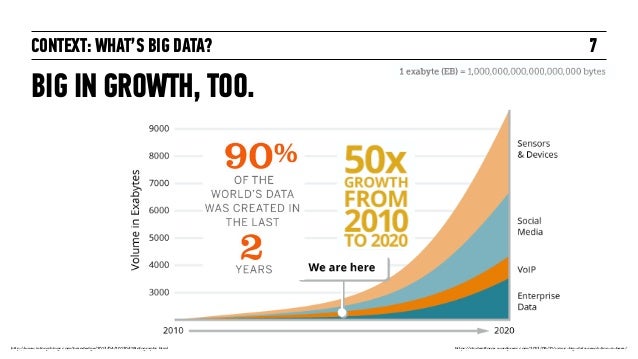
On this planet, every individual produces a considerable amount of digital data, which companies seek to store. Some analysts predict that we are only at the beginning of an exponential curve of digital production, and that this production is tending to accelerate. With the explosion of connected objects, data production over the next few years is set to increase 50-fold, as this study shows. New storage systems, such as object storage, are set to emerge as the solution for managing this data. Object storage is one of the new trends. But do you know how it works?
-
What is Object Storage?
Object Storage enables the management of very large volumes of unstructured data. The system is based on objects and metadata.
Unlike traditional systems, the system is based on objects rather than blocks. In block mode, the file was divided into several blocks, each with its own address. In object mode, each file corresponds to an object to which an access path (an address) and a unique identifier are associated, and which is then stored in a linear address space, making the system scalable.
An object is composed of :
- The data
- A unique identifier: This identifier corresponds to the data's access path. The user therefore has a unique reference base, wherever the object is located.
- Metadata: This is information linked to the context of the object, such as the type of data (video, file, etc.), its structure, etc. This metadata makes it possible to link several objects containing the same metadata.

What are the advantages of Object Storage?
Cost is one of the primary motivations. Data volumes are growing exponentially, and companies are storing more and more data. From a financial point of view, NAS/SAN systems are not always suitable for managing very large volumes of data.
With Object Mode Storage, you can create Petabyte-capable storage spaces from ultra-dense servers at low cost. Write, read and redundancy mechanisms are entirely managed by the storage software. What's more, it's possible to mix servers from different brands, allowing you to optimize server purchases according to the market.
Scalability of environments. Storage systems based on object-oriented storage are easily scalable. For the user integrating the storage system, everything is transparent. They communicate with the system via RESTful APIs, like the industry standard S3. On the administrative side, all you have to do is manage the system's evolution and storage capacity, and add servers as and when required. These servers are then taken into account automatically, with no need to re-engineer the system.
The ability to interact via APIs. Generally speaking, object-mode storage systems have APIs that enable an application developer to easily interact with the system via simple commands (PUT/GET/DELETE). Integration is therefore straightforward, and the developer no longer needs to rethink the storage architecture. It evolves seamlessly.
What uses are suited to this system?
These systems are ideal for storing so-called unstructured data. This includes data that is rarely modified, unlike so-called transactional data, which is constantly modified, such as databases. Some examples of unstructured data
- Static data from the web (images, videos, e-mail, etc.).
- Backup data
- Archiving systems
With new uses, this data will tend to grow exponentially. Object Storage is not the answer to every storage problem. But it can solve many of the problems associated with growing data volumes.
