

PAM: How to Secure and Control Privileged Access?
Administrators, service providers, and technical teams have extensive access rights to the information system’s servers, applications, and equipment. While this access is essential, it also makes them a particularly vulnerable target: ANSSI notes that the usernames and passwords associated with administrative accounts are among the first targets of a cyberattack.
A privileged access management (PAM) solution—short for *Privileged Access Management*—helps better protect these “keys to the kingdom.” It centralizes access, limits the privileges granted to each user, protects sensitive credentials, and improves the traceability of actions performed.
What is PAM (Privileged Access Management)?
A PAM is a solution designed to manage and secure accounts with elevated privileges. It is particularly relevant for internal administrators, operations teams, and third-party service providers who need to access certain IT system resources.
The principle is to place a controlled intermediary between the user and the target resource. This ensures that each person has personalized access only to the environments they need, based on predefined rules.
PAM can also prevent the technical account password from being directly exposed to the user. Credentials are managed by the bastion and used to log in without having to be disclosed or shared. PAM solutions also allow for the rotation and securing of these credentials.
Why are administrator accounts particularly vulnerable?
A compromised administrator account offers far more possibilities than a standard user account. Once an attacker has gained elevated privileges, they may attempt to move around the IT system, modify configurations, access critical resources, or compromise other accounts.
With regard to ransomware, CISA also points out that malicious actors frequently exploit privileged accounts to spread their attacks throughout the entire network.
The PAM helps reduce this scope of action by limiting each account to only what is strictly necessary, in accordance with the principle of least privilege. ANSSI specifically recommends restricting the scope and permissions of administrative accounts in order to limit the potential impact of their compromise.
Would you like to better manage access for your administrators or partners? Scalair’s experts can work with you to develop a solution tailored to your environment.
PAM and Zero Trust: Never Grant Implicit Trust
PAM fits naturally into a Zero Trust approach applied to users with the most sensitive privileges.
The Zero Trust principle holds that a user should not be considered trustworthy simply because they are inside the network. Every access attempt must be authenticated, authorized, and limited to the necessary resources. NIST specifically highlights the granularity of access control and the principle of least privilege at the heart of this approach.
For administrators, PAM provides a practical way to implement these principles: verified identity, authorized target, limited privileges, potentially temporary access, and a traceable session.
PAM, IAM, and VPN: What Are the Differences?
IAM (Identity and Access Management) broadly covers the management of digital identities and their access rights. PAM focuses more specifically on privileged accounts and access.
A VPN, on the other hand, secures a remote connection to the network. It does not, on its own, serve the same purposes as fine-grained privilege management. Depending on the chosen architecture, a PAM can thus prevent a service provider from being granted broader network access than is necessary.
How does a PAM system actually secure access?
A PAM allows you to enforce several complementary rules: restrict permissions, mask technical passwords, manage temporary access, and track sessions.
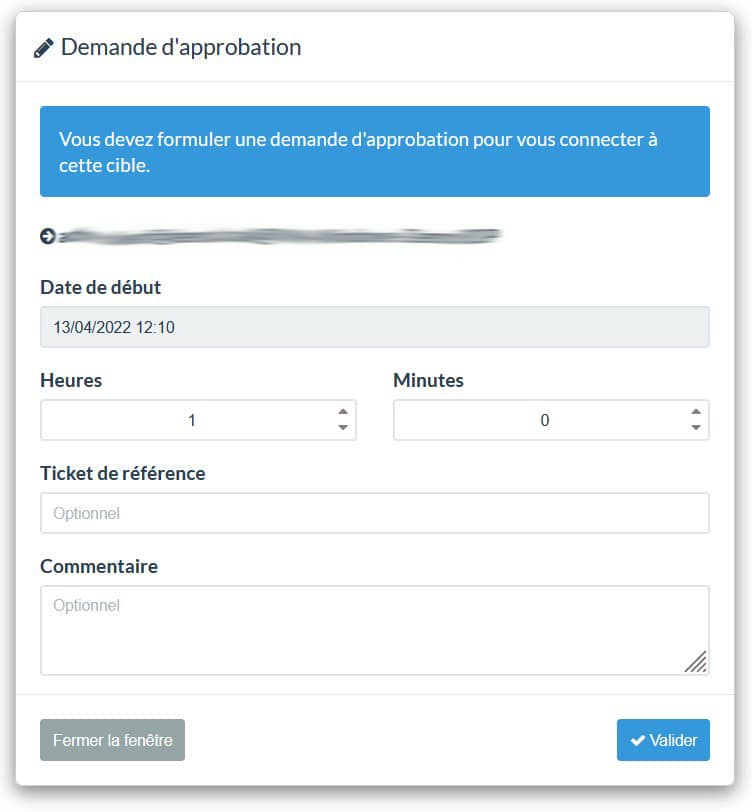
A one-time action may, for example, be permitted only during certain time periods or require approval from a supervisor.

Traceability then makes it possible to determine which user logged in, when, and to which resource, and to maintain a session history based on the features implemented.

PAM and NIS2: Why Is Traceability Becoming Strategic?
For organizations falling within the scope of NIS2, access management is one of the cybersecurity that must be considered. In particular, the directive requires policies for access control, asset management, incident management, and the security of relationships with suppliers and service providers.
The ability to log privileged access thus helps demonstrate control over operations performed on sensitive resources. The European requirements associated with NIS2 require entities subject to its detailed provisions to log privileged access and activities performed by administrator accounts.
In an industrial environment, this issue takes on particular significance when an administrator or service provider performs actions on systems related to production. Traceability then helps document who performed the action, when, and on which resource, particularly in the context of IT/OT convergence.
Managed PAM: Why Choose a Bastion-as-a-Service Solution?
Implementing a PAM is not just a matter of installing a tool. You must identify the affected accounts, define the accessible resources, assign the appropriate privilege levels, and organize the approval and revocation processes.
With its Bastion as a Service offering, Scalair provides a managed PAM solution that enables organizations to control, audit, and track administrator access. Support also includes assistance with the solution’s deployment and configuration.
The project's success also depends on organizational factors: mapping accounts with privileged access, identifying the people who truly need them, and establishing simple procedures all contribute to its long-term adoption.
Would you like to determine whether a PAM solution is right for your information system? Talk to a Scalair expert to analyze your privileged access and identify a solution tailored to your needs.
